
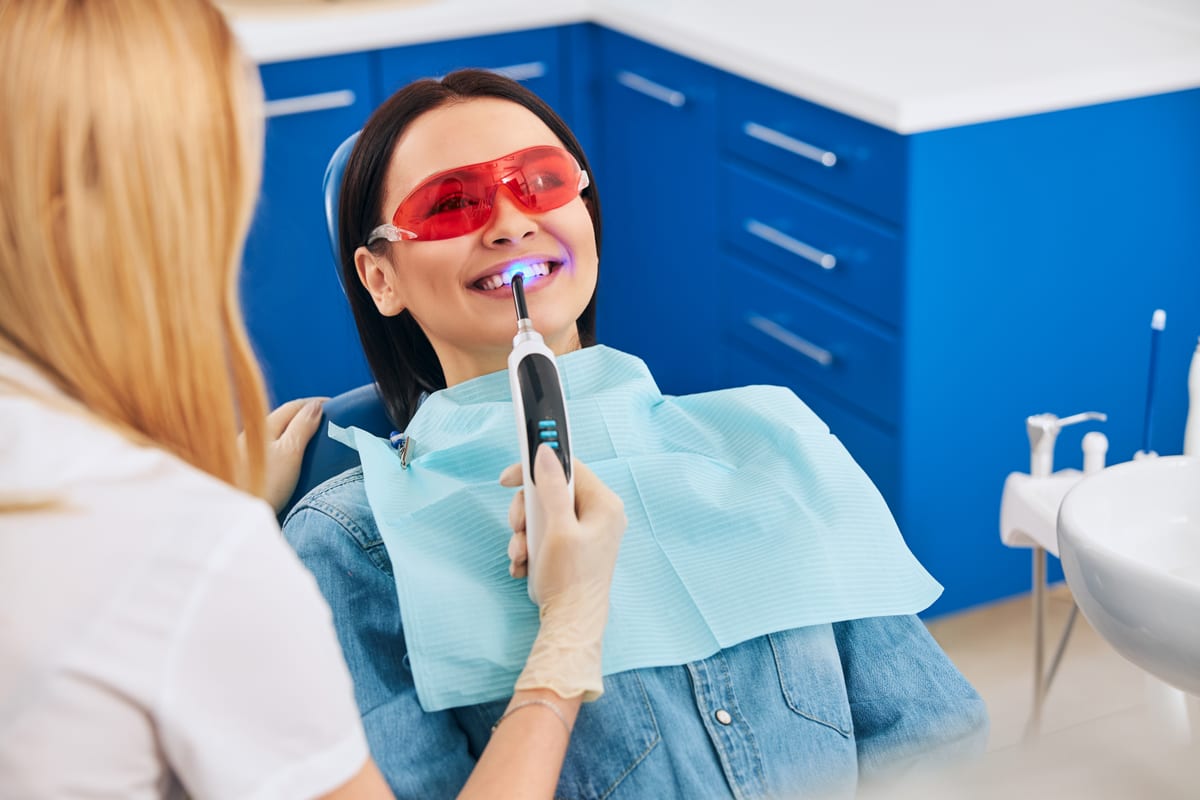
Many Oak Forest patients ask the same question before their first whitening visit: is professional teeth whitening safe for your enamel and gums? It is a fair concern. You want a brighter smile, but not at the expense of your dental health. At Advanced Solutions Family Dental, Dr. Carly Paragas helps patients understand exactly what whitening does — and what it does not do — to their teeth.
The short answer is yes. Professional whitening is safe for most healthy adults when performed correctly. But there are important details every patient should know before starting treatment.
How Professional Teeth Whitening Works in Oak Forest
Professional whitening uses a peroxide-based gel applied directly to the teeth. The hydrogen peroxide or carbamide peroxide penetrates the enamel. It then breaks apart stain molecules trapped inside the tooth structure. This process brightens the tooth from within.
The key difference between professional and over-the-counter products is concentration. Professional treatments use higher-strength formulas. A dental professional monitors the process to protect your soft tissues. This supervision is what makes professional whitening both effective and safe.
In-office treatments typically take about one hour. Take-home trays from your dentist are custom-fitted to your teeth. Both approaches deliver controlled, consistent results. Over-the-counter strips cannot replicate this precision.
Is Professional Teeth Whitening Safe for Your Enamel and Gums Oak Forest Patients Should Know
One of the most common fears is that whitening will damage enamel permanently. Research shows this is not the case with professionally applied treatments. Studies confirm that peroxide-based whitening does not significantly alter enamel structure. Enamel hardness and mineral content remain stable after professional whitening.
However, temporary enamel sensitivity is possible. This happens because whitening opens tiny pores in the enamel surface. These pores allow peroxide to reach stain molecules. The pores typically close again within 24 to 48 hours after treatment.
Your enamel is not dissolving or thinning. The sensitivity you feel is a temporary response. Using a desensitizing toothpaste before and after treatment can reduce discomfort significantly. Dr. Paragas can recommend the right product for your needs.
What Whitening Does to Your Gums — and How We Protect Them
Gum irritation is another valid concern. High-concentration peroxide gel can irritate gum tissue if it contacts the gums directly. This is why professional application matters so much. Dr. Paragas and her team use protective barriers to isolate the gums during treatment.
At-home whitening trays from a dental office are custom-made for your mouth. They fit precisely so gel stays on the teeth. This reduces the chance of gel leaking onto sensitive gum tissue. Generic strips often do not fit this well.
Any mild gum sensitivity after whitening typically resolves within a day or two. If you have existing gum concerns, it is important to address those first. Patients dealing with gum disease may benefit from Periodontal Treatment Oak Forest before pursuing whitening. Healthy gums respond better to whitening and recover faster.
Who Should Avoid Professional Teeth Whitening
Professional whitening is not the right choice for every patient. Knowing when to wait — or choose an alternative — protects your long-term dental health. Dr. Paragas evaluates each patient individually before recommending any whitening treatment.
You may need to postpone whitening if any of the following apply:
- You have active gum disease or untreated cavities
- You have severely sensitive teeth or exposed root surfaces
- You are pregnant or nursing
- You have tooth-colored restorations like crowns or veneers on front teeth
- You are under 16 years of age
- You have an allergy to peroxide-based products
Whitening gel does not change the color of dental restorations. If you have crowns or veneers on visible front teeth, whitening may create a color mismatch. Your natural teeth will brighten, but the restorations will not. Dr. Paragas will flag this during your exam and discuss your options.
Patients with untreated cavities or damaged enamel should complete restorative care first. Peroxide can irritate nerves in compromised teeth. In some cases, tooth pain during whitening signals a deeper issue. Patients with severe tooth pain may need to explore Root Canals Oak Forest before any cosmetic treatment.
Tips for a Safe and Comfortable Whitening Experience
Preparation makes a significant difference in how comfortable your whitening experience will be. A few simple steps before and after treatment protect both your enamel and your gums. Dr. Paragas provides personalized guidance at every stage.
Follow these tips for the best results:
- Schedule a dental exam and cleaning before whitening begins
- Use a soft-bristled toothbrush and desensitizing toothpaste for two weeks before treatment
- Avoid acidic foods and drinks for 24 hours before and after whitening
- Do not eat or drink anything that stains teeth for 48 hours after treatment
- Follow all instructions provided with your custom take-home tray kit
- Report any unusual or prolonged sensitivity to Dr. Paragas right away
Maintaining your results is also part of the safety equation. Touch-up treatments every six to twelve months keep your smile bright. Overusing whitening products too frequently can increase sensitivity over time. Stick to the schedule your dentist recommends.
Why Professional Oversight Matters in Oak Forest
Teeth whitening is not a one-size-fits-all treatment. Every patient has unique enamel thickness, gum health, and sensitivity levels. A trained dental professional can identify risk factors before they become problems. That is something no whitening kit sold at a drugstore can offer.
Dr. Carly Paragas and the team at Advanced Solutions Family Dental take a thorough approach. Your oral health is evaluated before any cosmetic treatment begins. If whitening is not appropriate for you right now, you will learn why. You will also learn what steps can get you there safely.
Oak Forest patients deserve bright smiles and healthy teeth at the same time. Professional whitening, done correctly, achieves both goals. Do not let unanswered safety questions hold you back from a treatment that could genuinely improve your confidence.
Ready to find out if professional teeth whitening is right for you? Book Now to schedule your appointment with our team.
Frequently Asked Questions
Does professional teeth whitening damage enamel permanently?
No. Clinical research consistently shows that professional whitening does not permanently damage enamel. You may notice temporary sensitivity, but enamel structure and hardness remain stable. Always choose professional treatment over unregulated DIY products for the safest outcome.
How long does tooth sensitivity last after whitening?
Sensitivity after professional whitening usually lasts 24 to 48 hours. Using a desensitizing toothpaste before and after treatment helps reduce discomfort. If sensitivity lasts longer than a few days, contact Dr. Paragas at Advanced Solutions Family Dental for guidance.
Can I whiten my teeth if I have gum disease?
It is not recommended. Active gum disease means your gum tissue is inflamed and vulnerable. Whitening gel can irritate already-compromised gums and worsen discomfort. Treat gum disease first, then revisit whitening once your gums are healthy.
Will whitening work on crowns, veneers, or fillings?
No. Whitening gel only works on natural tooth enamel. It does not change the color of dental restorations like crowns, veneers, or composite fillings. Dr. Paragas will evaluate your existing restorations before recommending whitening to avoid color mismatches.
How often is it safe to whiten your teeth professionally?
Most dentists recommend professional whitening no more than once or twice per year. Touch-up treatments can be done more sparingly as needed. Overusing whitening products increases the risk of enamel sensitivity and gum irritation. Follow the schedule Dr. Paragas recommends for your specific situation.